
Control systems sit at the heart of industrial facilities, discreet yet essential. They continuously measure, analyze, and adjust processes to ensure safety, performance, and reliability. From sensors to programmable logic controllers, from distributed control systems (DCS) to SCADA supervision, every component communicates and reacts in real time. Operators oversee these systems from control rooms, manage alarms, and intervene when necessary.
In the context of Industry 4.0, where connectivity creates new opportunities but also new vulnerabilities, control systems remain the invisible backbone that keeps operations running smoothly.
A control system performs three tasks continuously, simultaneously, without interruption: it measures, it compares, it acts.
It measures because you cannot control a process without first knowing what is happening. Hundreds, sometimes thousands, of sensors continuously report physical variables such as temperature, pressure, flow, level, vibration, and chemical concentration. Each value is time-stamped, recorded, and transmitted.
It compares because a measurement alone is not enough. What matters is the gap between what is observed and what is expected. If a reactor pressure is supposed to stay between 4.8 and 5.2 bar and it rises to 5.6, the system detects it. It also knows how long the increase has lasted, how fast it is rising, and whether the trend is stabilizing or accelerating.
It acts because that is where everything comes together. A valve opens. A pump slows down. An alarm is triggered. Sometimes all of this happens within milliseconds, long before a human operator has time to read the first value on a screen. This is known as closed-loop control: the measurement drives the action, which modifies the process, which generates a new measurement. Continuously.
What fundamentally distinguishes control systems from simple automation is their ability to adapt in real time to actual conditions. Traditional automation executes a predefined sequence regardless of what happens. A control system listens to the process and adjusts its response accordingly. This distinction is critical in industries where operating conditions constantly change.
To understand how a control system is structured, it helps to think in layers. Each layer has a specific role and communicates with the ones next to it.
At the lowest level are sensors and actuators. Sensors measure. Actuators execute. In between, transmitters convert physical signals into standardized electrical signals (4–20 mA, HART, Fieldbus) that higher layers can interpret. This is the direct interface with the industrial process.
Measurement quality starts here. A poorly calibrated sensor, a drifting transmitter, or a damaged cable shield can lead the entire control chain to operate on incorrect data.
The programmable logic controller (PLC) is where most control logic resides. It reads inputs from sensors, executes a program, and writes outputs to actuators. This cycle repeats continuously, often every few milliseconds in fast applications.
The key strength of industrial PLCs is determinism. Unlike standard computers that may slow down, crash, or be interrupted by updates, PLCs execute their cycle within a guaranteed and consistent time frame, regardless of conditions.
Major manufacturers such as Siemens, Schneider Electric, Rockwell Automation, Mitsubishi, and Beckhoff offer a wide range of PLCs, from compact controllers for single machines to fully redundant, fault-tolerant systems for critical processes.
For continuous industrial processes such as refineries, petrochemical plants, power stations, or paper mills, a single PLC is not enough. The scale, complexity, and need for uninterrupted operation require a different architecture: the distributed control system, or DCS.
In a DCS, control is not centralized in a single device. It is distributed across multiple local controllers, each responsible for part of the process. These controllers communicate with each other and with the supervision layer through a dedicated network. If one controller fails, the rest continue operating independently.
This distributed architecture offers key advantages. It allows gradual system upgrades without shutting everything down. It simplifies maintenance by isolating issues. It improves availability by limiting the impact of partial failures. Leading DCS platforms such as Honeywell Experion, Emerson DeltaV, ABB 800xA, Siemens PCS 7 and its successor PCS neo, and Yokogawa Centum integrate control, supervision, alarm management, and data historization into a unified environment.
SCADA (Supervisory Control and Data Acquisition) addresses a different challenge: monitoring geographically distributed assets, sometimes over hundreds or thousands of kilometers. Water and wastewater networks, pipelines, power distribution grids, and railway infrastructure all rely on SCADA systems.
Unlike a DCS, SCADA is not the control system itself. It collects data from field devices such as local PLCs and remote terminal units (RTUs) using long-distance communication protocols like DNP3, IEC 60870, IEC 61850, and Modbus TCP. It centralizes, displays, archives data, and allows operators to send remote commands. The control logic remains in the field devices.
This distinction is critical for safety. If communication with the SCADA server is lost, field equipment continues operating based on its local programming. SCADA provides visibility and remote control, but it is not a single point of failure.
Above the control layer sit manufacturing execution systems (MES) and, beyond that, enterprise resource planning (ERP) systems. Control systems feed these platforms with real-time production data such as output volumes, energy consumption, equipment availability, and in-line quality measurements. In return, they receive production orders, recipes, and schedules.
This vertical integration, from sensor to enterprise system, forms what is known as the digital continuum. It is central to Industry 4.0 initiatives and is reshaping how control systems are designed and operated.
No matter how advanced, a control system is not autonomous. Human operators monitor operations, respond to anomalies, validate changes, and manage startups and shutdowns. The control room is where this interaction takes place.
Designing a control room is not about aesthetics or comfort. It is about performance and safety. The ISO 11064 standard, dedicated to the ergonomic design of control centers, defines every aspect of the space: screen viewing angles, console height, lighting levels, acoustics, and traffic flow. Each requirement is based on real-world experience, sometimes learned the hard way.
Studies of industrial accidents often reveal the same pattern: operators overwhelmed by too much information in environments that do not help them prioritize end up missing critical signals. A well-designed control room guides attention to what matters, at the right moment and in the right format.
The interface operators use is called a synoptic display. It is a graphical representation of the industrial process, typically based on piping and instrumentation diagrams adapted for real-time display. Measured values are overlaid, equipment states are color-coded, and active alarms are clearly indicated.
Design philosophy has evolved significantly. In the past, engineers aimed to replicate detailed diagrams on screen. Today, this approach is recognized as counterproductive. Guidelines such as Abnormal Situation Management (ASM) and High Performance HMI promote simplified interfaces with low cognitive load, where color is reserved for anomalies and normal conditions are easy to read at a glance.
If one topic captures the challenges of control system supervision, it is alarm management. In theory, an alarm alerts the operator to a situation requiring attention. In practice, many facilities generate so many poorly filtered alarms that they lose their meaning.
Alarm flooding, where numerous alarms trigger simultaneously during an incident, creates cognitive overload that operators cannot manage. This phenomenon has been identified as a contributing factor in several major industrial accidents. EEMUA, in its reference publication 191 on alarm systems, established operational benchmarks that have become global standards: no more than 150 alarms per operator per hour under normal conditions, and fewer than 10 during upset conditions to remain manageable.
An alarm rationalization project is a deep, time-consuming effort. Each alarm must be reviewed individually to confirm that it corresponds to a genuinely abnormal situation requiring operator action, that it is set at the correct threshold, properly documented with a clear procedure, and not duplicated elsewhere. The next step is to align sequencing and timing so the interface supports effective event resolution. A defining feature of critical events is the simultaneous breach of multiple thresholds.
For years, control system security focused mainly on functional safety, preventing accidents caused by internal failures such as hardware faults, software bugs, or configuration errors. External threats were considered theoretical.
That is no longer the case. In 2023, ENISA reported a 35 percent increase in cyberattacks targeting industrial infrastructure and operational technologies between 2021 and 2022. Incidents such as the attacks on the Ukrainian power grid in 2015 and 2016, or the intrusion into a water treatment plant in Oldsmar, Florida in 2021, where chemical dosing setpoints were remotely altered, have shown that connected control systems can be compromised, manipulated, or shut down.
The main source of vulnerability is also what enabled Industry 4.0 progress: the connection between operational technology (OT) and corporate IT networks. When a DCS is accessible from office networks to share production data with ERP systems, the reverse path may also exist, potentially exploitable by attackers who compromise administrative systems.
Regulatory responses are emerging. The IEC 62443 standard provides a structured framework for securing industrial control systems, including network segmentation, role-based access control, identity management, communication monitoring, and patch management processes. The European NIS2 directive, which came into force in 2024, imposes concrete cybersecurity requirements on operators of critical infrastructure, with significant penalties for non-compliance.
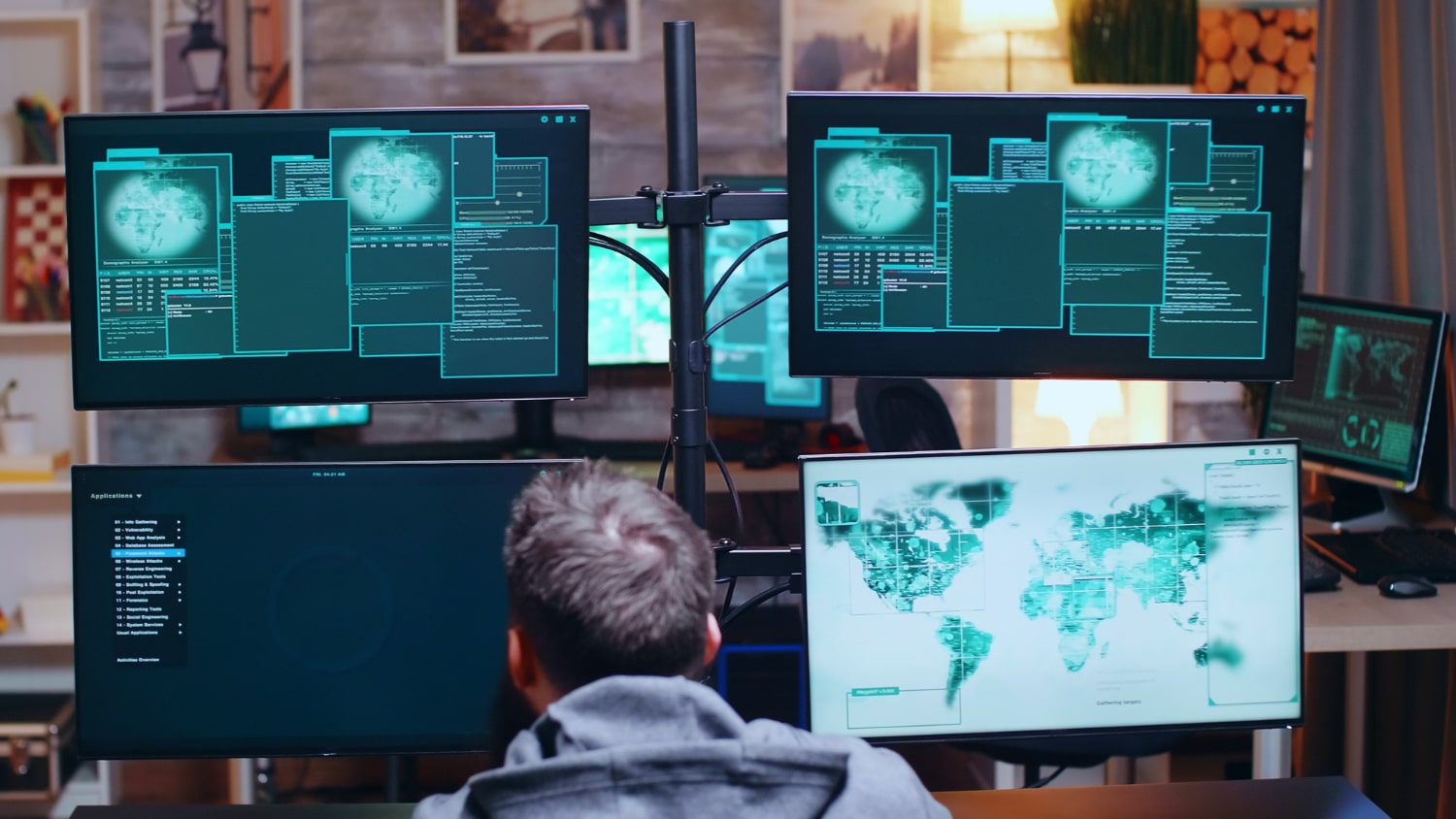
Functional safety, as defined by standards such as IEC 61511 for process industries, aims to prevent accidents caused by failures within the control system itself, including hardware faults, software bugs, and design errors. It relies on redundant architectures, independent safety instrumented systems (SIS), and safety integrity levels (SIL) assigned to each safety function.
Cybersecurity focuses on preventing intentional compromise by malicious actors, whether internal or external. The two disciplines are complementary and must be addressed together in modern projects.
A safety instrumented system (SIS) is dedicated exclusively to safety functions: detecting hazardous conditions and bringing the system to a safe state, such as triggering an emergency shutdown or opening a relief valve. It is physically and logically separated from the DCS for a simple reason: if the DCS is compromised, whether by failure or cyberattack, it must not compromise the SIS. This independence is a fundamental requirement of IEC 61511.
Increasingly so. Data from control systems, including energy consumption, real-time emissions, and production efficiency, directly feeds into environmental reporting. The ability to extract, consolidate, and validate this data from historians and supervisory systems has become a concrete challenge for ESG compliance teams. As a result, some industrial operators are revisiting their data collection architectures to better meet these requirements.
Control systems are a quiet discipline. They do not seek visibility. They do their job, measuring, comparing, acting, without drawing attention because everything works as it should. It is only when they fail that their importance becomes clear.
Today, the field stands at a crossroads. The push toward connectivity brings real opportunities such as data analytics, remote supervision, and predictive maintenance, but also introduces new vulnerabilities that the sector is still learning to manage. Roles are evolving, architectures are becoming more complex, and required skills are expanding.
What does not change is the core mission: maintaining control over complex processes, often under demanding conditions, in facilities where failure is not an option.

Copyright © 2026. MOTILDE. All rights reserved.