
Ask a CEO whether their company has a crisis management team, and you’ll almost always get the same answer: yes. There’s a document somewhere, a list of names, maybe a room that gets shown off to auditors now and then. The trouble is, that document was probably written once, rubber-stamped by the leadership committee, and never looked at again. When a serious incident actually hits, a break-in, a major outage, a cyberattack, the question that matters isn’t whether a crisis team exists on paper. It’s how fast it can actually get moving. And getting moving doesn’t mean everyone crammed into a room. It means being able to make decisions, coordinate what’s happening on the ground, and communicate without contradicting yourself from one minute to the next.
This gap between the document and reality is exactly why so many organizations that look buttoned-up on paper fall apart in the first few hours of an actual crisis.
This article gets into what a crisis management team really is, who belongs on one, how to equip it properly, and the mistakes that keep showing up, crisis after crisis, in organizations that thought they were ready.
Key takeaways
Part of the confusion comes from the fact that the term gets used for two different things: the team itself, and by extension, wherever that team happens to meet, often called the war room. Strictly speaking, though, a crisis management team is the small group tasked with steering the response when something threatens an organization’s safety, continuity, or reputation. It pulls together everything coming in from the ground, makes the calls, and keeps things coordinated until the situation is manageable again through normal channels.
It’s nothing like a leadership committee meeting in some scaled-down mode. A leadership committee runs the business day to day, on familiar ground, with habits that are already well worn. A crisis team does pretty much the opposite. It deals with the unknown, under real time pressure, using a completely different set of tools: short situation updates, decisions logged as they’re made, a clear order for who speaks and when. Which is exactly why a leadership committee that just relabels itself a crisis team, without changing how it actually operates, so often ends up frozen. Its members fall back on the habits of an ordinary meeting in a moment that has no patience for that pace.
The crisis management team is the group and the way it makes decisions. The crisis room is the space, physical or virtual, where that group actually works. The command post sits closer to the action: it carries out whatever the strategic team has decided, and it doesn’t necessarily share a location, or even the same people.
In bigger organizations, this split plays out on two levels: a strategic team that sets direction and speaks for the organization externally, and a tactical team that turns those calls into action on the ground.
There’s no hard and fast rule here, but one idea comes up again and again in real accounts of how this actually plays out: when in doubt, activate. Pulling a team together for something that ends up being nothing barely costs anything. Waiting too long to activate one, on the other hand, tends to cost everything: whatever time gets lost in those first few minutes never gets made back.
Three things help make that call something closer to a judgment than a gut reaction from whoever happens to be in charge that day:
When people’s physical safety is on the line, that activation window shrinks to minutes: somewhere between fifteen and thirty, according to the organizations that handle this best. Past that point, the situation has usually already slipped out of the hands of whoever’s supposed to be steering it.
The most common mistake is building the team around representation instead of effectiveness, pulling in one manager from every department so “everyone’s covered.” What you end up with is a fifteen-person meeting where nobody actually decides anything. Real-world experience points somewhere else entirely: a decision-making circle of five to eight people, ten at the outside.
| Role | What they actually do |
|---|---|
| Team leader | Calls the shots, sets the direction, stays out of the weeds |
| Operations lead | Coordinates whatever’s happening on the ground or on technical systems |
| Communications lead | Signs off on messaging, keeps an eye on how it’s landing outside |
| Legal advisor | Flags reporting obligations and legal exposure |
| HR lead | Handles the human side of things and social logistics |
| Crisis log keeper | Timestamps every decision, every action, every exchange |
That last role deserves its own mention, because it gets skipped or folded into someone else’s job more often than it should. Handing the log to someone who’s also making decisions is a mistake. Under pressure, one of those two jobs always ends up shortchanged. Keeping them separate isn’t red tape for its own sake, it’s legal protection as much as it’s a management tool, especially when you need to reconstruct afterward who knew what, and when.
The team leader shouldn’t be picked by default just because of seniority, either. An executive who’s never actually lived through a crisis tends to want to do rather than lead: heading out to the front lines personally, calling teams directly, going around their own team entirely. This pattern, documented as far back as Patrick Lagadec’s research on crisis teams in the 1990s, is still one of the most commonly cited reasons crises get mismanaged.
A well-put-together team that’s badly equipped runs out of gas fast. What actually makes the difference comes down to three specific things, and none of them are about how much money got spent on the room.
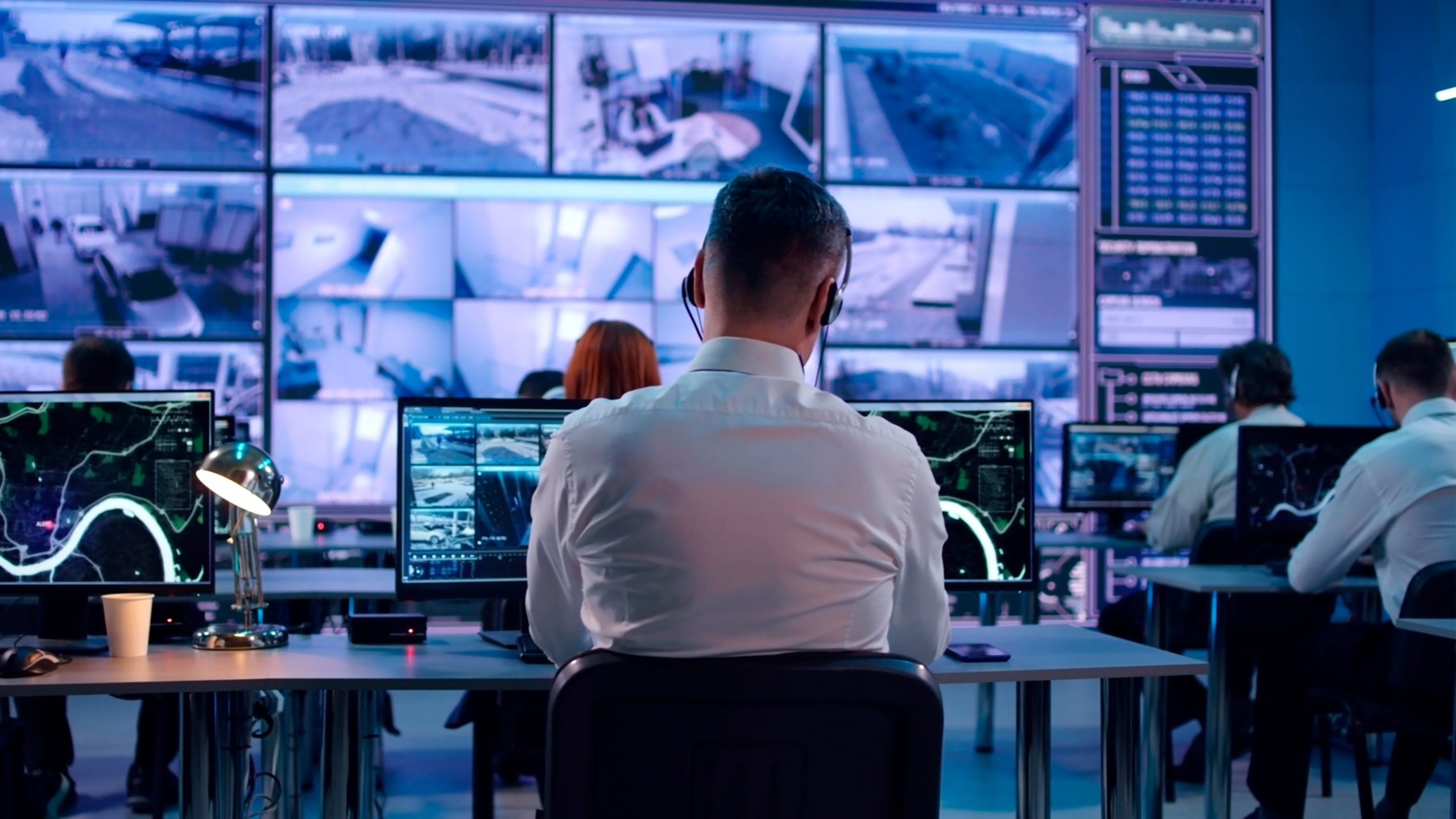
First is having one shared situation report that everyone can see. “Crisis fog,” that pile-up of partial, sometimes contradictory information that shifts by the hour, is the single biggest obstacle to making a good call. Without a shared, real-time source everyone’s working from, each team member ends up operating on their own version of events. A video wall or a collaborative display, built the way a control room would build one, solves a good chunk of that problem just by putting the same picture in front of everyone.
Second is redundancy in how the team communicates. If the crisis touches the information system, and that happens more often than people expect, even in crises that start out purely physical, the team’s own tools can’t be riding on that same system. An independent phone line, internet access that doesn’t depend on the main network, and video conferencing that actually works for remote members mean the team keeps functioning even when everything else is struggling.
Third is how accessible the space itself really is. A crisis room that needs a badge half the team doesn’t happen to be carrying on a Saturday night isn’t worth much in practice. It’s the kind of detail that looks minor right up until it’s the only one that matters.
This is exactly the territory where Motilde’s experience with control rooms and supervision workstations pays off: display reliability, redundant connections, ergonomics built for functioning under pressure. Designing a crisis room is, technically, the same job as designing a control room. Same demand for uptime, same zero tolerance for latency, same need for a shared view that doesn’t fail.
That last step is the one that changes everything over time. A team that drills but never really debriefs just ends up repeating the same mistakes drill after drill without noticing.
Cyber remains the risk pushing the most organizations to rethink their crisis setup. Per the Allianz Risk Barometer 2026, cyber incidents rank first among the risks businesses fear most worldwide for the fifth year running, cited by 42% of risk management experts surveyed across 97 countries.
On the regulatory side, France’s rollout of the NIS2 directive now requires something like 15,000 entities across 18 critical sectors to keep a crisis management plan that’s regularly tested, and to be able to prove it to the relevant authority. A crisis management team has stopped being just good practice. For a growing number of organizations, it’s a compliance requirement, with an audit sitting right behind it.
| Criterion | Strategic team | Tactical team |
|---|---|---|
| Decisions | Overall direction, external communication | Operational execution, action on the ground |
| Composition | Leadership, communications, legal, HR | Technical experts, operational managers |
| Pace | Spaced-out situation updates | Near-continuous activity |
| Location | Dedicated crisis room or leadership space | Command post, close to the ground |
| Link to supervision | Receives a consolidated view | Continuously feeds information upward |
The misconception that trips up the most organizations is thinking a crisis document, however detailed, is enough on its own. A lot of these documents got written by an outside consultant, signed off in a single meeting, and filed away, until an actual incident showed they weren’t worth much. Go the other direction and you find organizations that sink money into sophisticated equipment without ever settling who actually decides what, and they land in the same place by a different road.
Another classic failure: letting the team leader step out to take a personal call or deal with something unrelated. Based on how these things tend to play out, that kind of disconnect is enough to stall the whole group’s collective momentum almost instantly. A crisis management team isn’t just a bunch of competent people in a room. It’s a group dynamic, and group dynamics break easily and are hard to put back together once a crisis is already underway.
A leadership committee runs the organization day to day, on familiar ground, with habits that are already established. A crisis management team is a temporary setup that only kicks in for an exceptional event, and it runs on a different set of rules: fast decisions, a narrow focus, everything documented as it happens. Some people might sit on both, but a leadership committee that just rebrands itself a “crisis team” without changing how it operates usually stays stuck in its own ordinary-meeting habits.
Keep the decision-making circle small: five to eight people in most real-world cases, with ten as a rough ceiling. Past that, coordination starts moving slower than the event it’s supposed to be managing. Bringing in outside experts as needed is fine, as long as they’re not added to the circle that actually makes the calls.
Not necessarily whoever’s most senior in the room. The job calls for real preparation: knowing the procedures cold, actually participating (not just watching) in drills, and being able to hold the line without getting dragged into operational detail.
A physical reference space is still the better bet, but it has to meet a few conditions: reachable within minutes even outside business hours, and equipped with communication tools that don’t depend on the main information system. These days, plenty of organizations pair a physical location with remote access for members who can’t get there in person.
For a crisis involving people’s safety, the benchmark sits between fifteen and thirty minutes. That clock doesn’t start when the team physically gets in a room together. It starts when the team can actually decide, coordinate on the ground, and communicate consistently.
Yes. ISO 22361, published in November 2022, now shapes best practice in crisis management and serves as a reference point for a lot of organizations building or auditing their own setup.
A crisis management team that exists on paper and one that actually works on the day it’s needed are two very different things, and the gap between them gets closed before the crisis, never during it. Composition matters, equipment matters just as much, but nothing replaces repeated drills run under conditions that resemble reality, even if imperfectly.
As regulatory requirements keep tightening and cyber scenarios increasingly crowd out the more “classic” kind of crisis, the line between one-off crisis response and everyday operational supervision keeps getting blurrier. The setups that hold up best will probably be the ones built right on top of an organization’s everyday supervision tools, rather than an isolated crisis room that only comes out of storage once a year for the mandatory drill.

Copyright © 2026. MOTILDE. All rights reserved.